Design
Constant Contact
Portfolio
My work involved
- Research, Discovery, User Interviews & User Testing
- Information Architecture & Navigation Redesign
- Goal-based Recommendation System
- Campaign Management, Grid, Calendar, Search & Filtering
- Reporting & Analytics across site experience
- Cross-collaborative Design Thinking & Facilitation
Impact
Onboarding continues after sign up
Through research and iteration, our teams learned that users need guidance on where to start and how to achieve their goals. They expect simple automation, including content like logos and imagery shared across campaign types.
We called the concept “Seeing is Believing,” and it spread quickly across the organization. By using a customer’s own content within campaigns, they became more likely to explore additional features. When paired with clear goals and a generated schedule of multiple campaigns, this led to increased conversion, feature adoption, and retention.
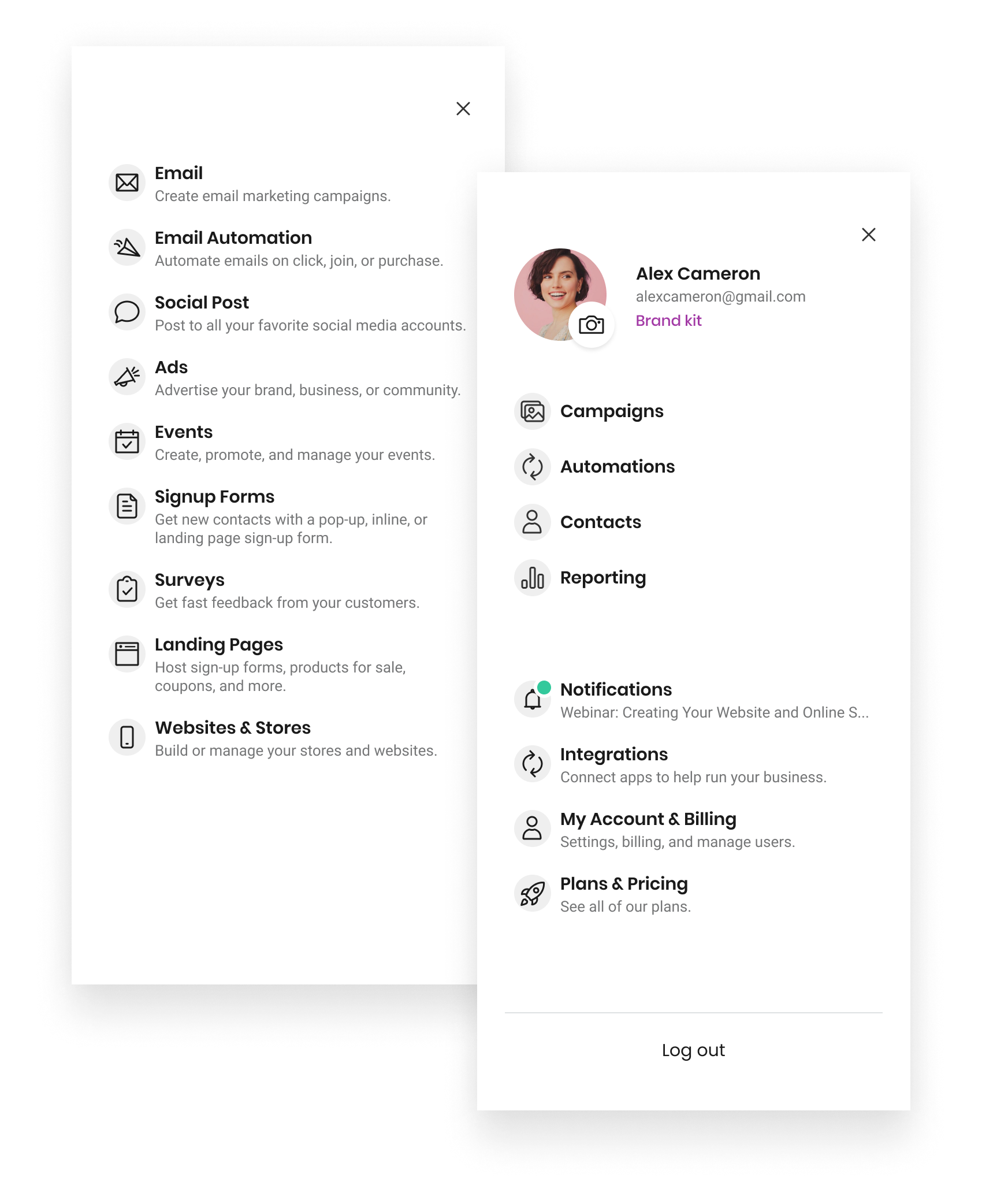
We're not hiding features, we're organizing things based on use.
Our information architecture needed an overhaul. Years of adding features with inconsistent patterns had created significant design and technical debt. The navigation had become so overloaded that it would overflow on anything smaller than a large desktop screen.
Looking at analytics, email was the most used feature at 99%, with a steep drop-off across others at 63% for signup forms, 22% for events, 2% for social, and 0.01% for websites. Through tree-sorting exercises, prototyping and testing, I identified clearer user expectations. I found that users wanted a more robust “create” experience that better explained each tool and organized features around high-level marketing goals.
From there, I explored a more tailored navigation model that could adapt to individual users, including options for customization.
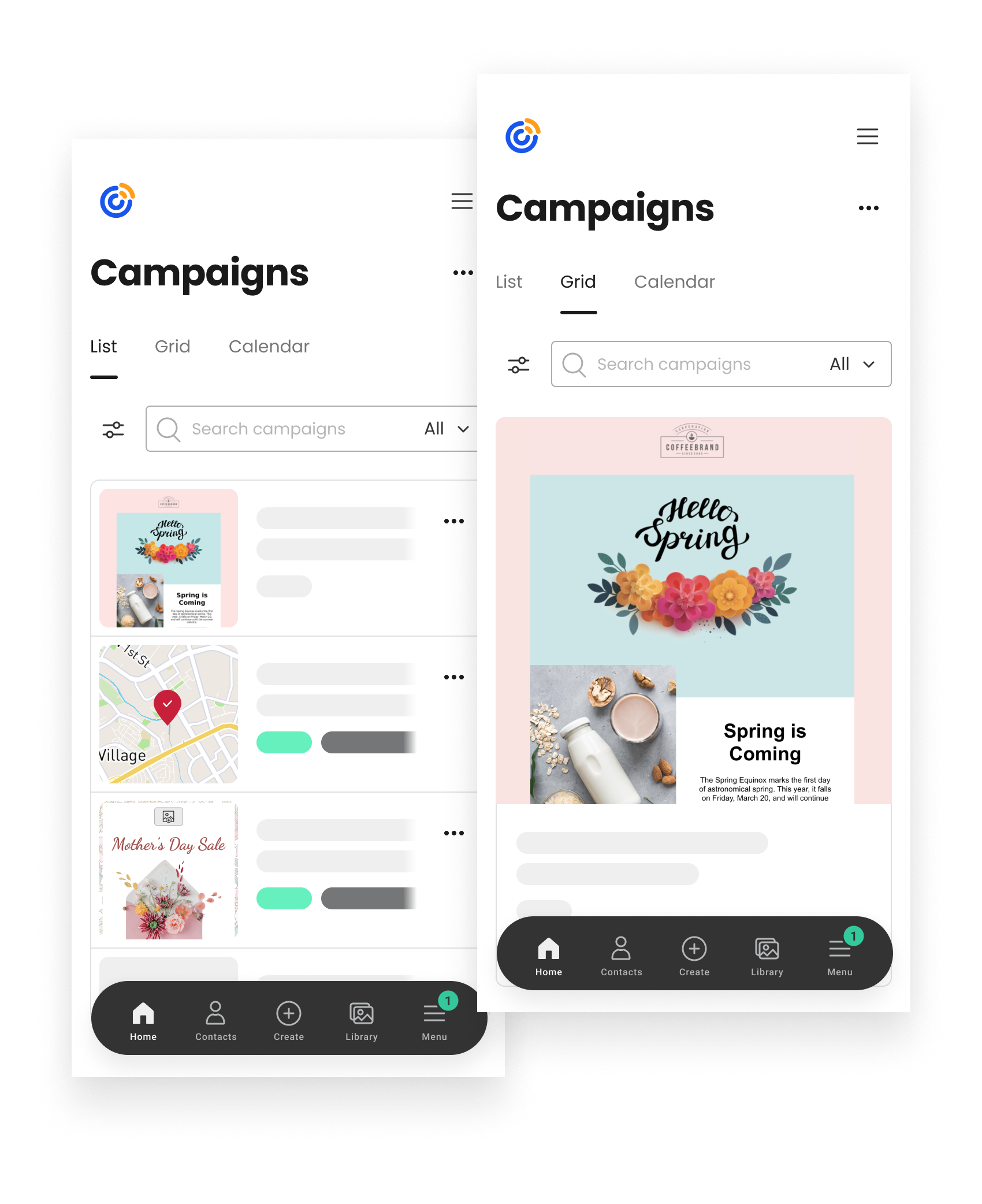
It's okay that some campaigns don't have a thumbnail, right?
Our experience for finding, filtering, and searching all campaigns needed a lot of love. When I started we normalized all campaign actions, thumbnails, previews, and metrics across all campaign types. Customers asked and we delivered a grid view, a calendar view and provided better filters and sorting. We also worked on creating a modern search experience and exposed the most useful actions that users wanted on each campaign type.
Our work in simplifying the product and thinking more holistically decreased tech debt and design debt across every team within the entire organization. Oh, and we reduced ten dashboards to one!
Other contributions
- Calendar - designed a way to sync to 3rd party calendar systems (Google, Microsoft)
- Managed - junior and mid-level designers across multiple squads, fostering a culture of continuous learning, peer critique, and shared design ownership
- Information Architecture - Standardized previews, filtering, scheduling, actions and statuses across all campaign types
- Reporting & Analytics - Drove cross-functional alignment to unify user data across the product, a foundational effort that directly enabled our recommendation and AI engine.
Get in Touch
Let's make
something great.
I'm available for fractional and full-time product design leadership. If you're building something that demands both strategic thinking and refined craft, let's talk.